
Two tools fight over this moment: proactive chat and popups. Most businesses pick one, use it badly, and conclude "it doesn't work." The truth is subtler: they work on different kinds of hesitation.
Two kinds of hesitation
Question hesitation: "Will this fit? When will it arrive? Is there a warranty?" The visitor wants information. They'd buy — if someone answered.
Commitment hesitation: "It's a bit expensive. Maybe next month. Let me think about it." The visitor doesn't need information. They need a reason to act now.
This distinction is everything. Answer a commitment problem with more information and you bore them. Answer a question problem with a discount and you cheapen yourself. Most businesses do exactly this, daily.
Where each tool wins
Proactive chat owns question hesitation. A visitor lingers on the shipping policy page; a chat message offers: "Questions about delivery? I can check times for your area." No forms, no friction — just an answer. The AI chatbot handles the repetitive version of this around the clock: sizing, stock, compatibility, returns.
Popups own commitment hesitation. The visitor moves to close the tab; an exit-intent offer appears: 15% off, first order. It's not information — it's a nudge. The popup builder's triggers exist for this exact geometry:
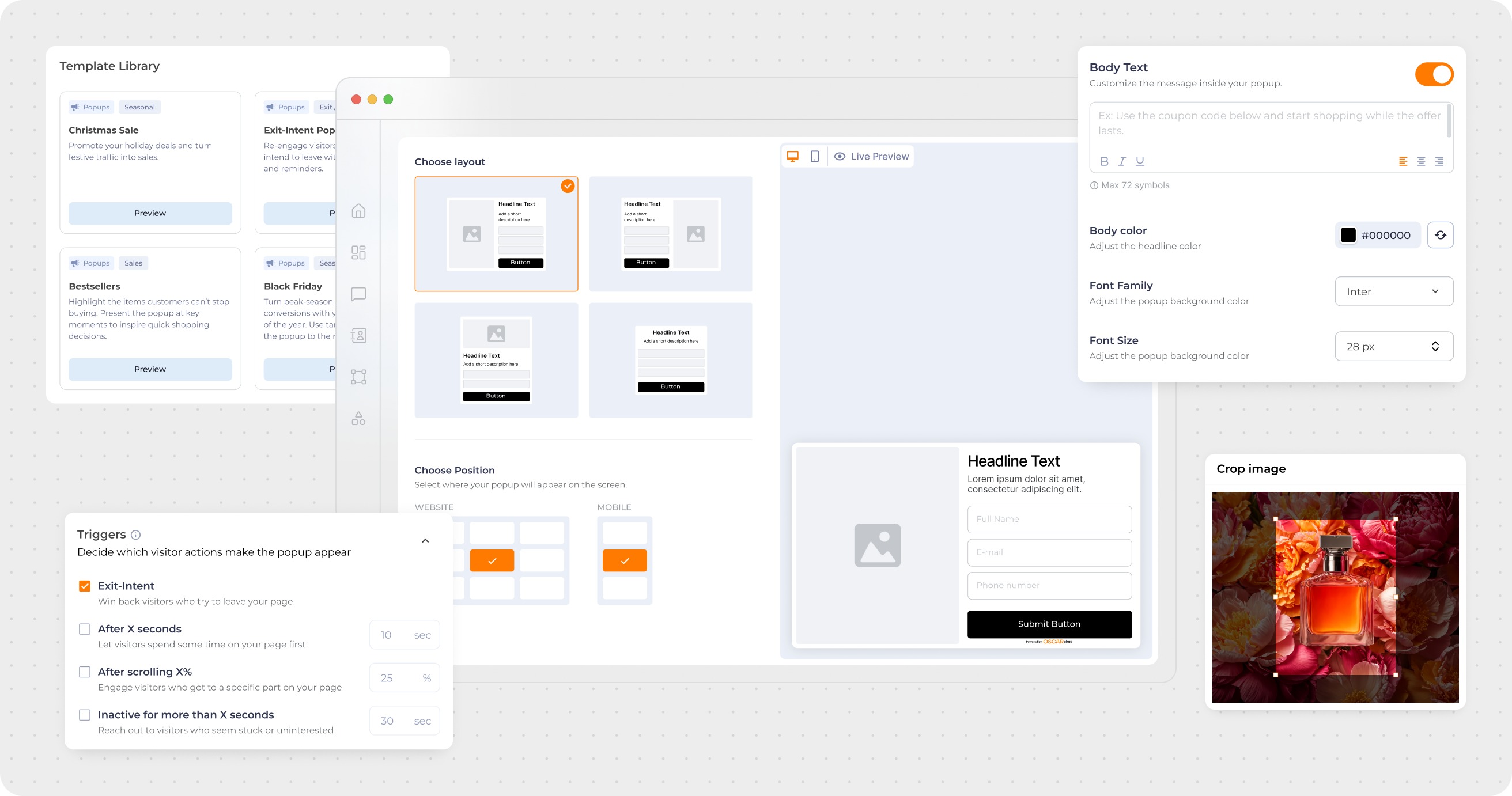
The combination is the strategy. Chat resolves the question; the popup resolves the commitment. A visitor asks about sizing, gets an answer, still hesitates — and the exit-intent discount closes it. Neither tool alone covers the full biography of a lost sale. Together, they're a system.
Why most businesses get this wrong
Three mistakes, repeated everywhere:
They automate the greeting, not the rescue. "Hi! How can I help?" at second zero helps nobody. Proactive chat should trigger on behavior — time on page, scroll depth, return visits — not on arrival.
They popup the committed. Showing a discount to someone mid-checkout doesn't save a sale; it discounts one. Exit-intent and inactivity triggers exist so you interrupt the leavers, not the buyers. Our display rules tutorial covers the targeting.
They measure the tool, not the moment. "Our popup converts at 3%" tells you nothing. "We recovered 3% of abandoning carts" tells you revenue. Instrument the hesitation — where it happens, what kind it is — and the tool choice becomes obvious.
The founder's question
Stop asking "chat or popups?" Start asking: "where do my visitors hesitate, and what kind of hesitation is it?" Analytics will show you the where — the pages with high exit rates, the carts that die at shipping info. The fix follows from the diagnosis.
Businesses that think in hesitations instead of tools end up with both tools, each doing what it's good at. That's not a bigger martech stack. That's just paying attention.
7-Day Pro Trial for Every New Account
For your first 7 days, you are automatically on the Pro plan.
FAQ
-
Should I use proactive chat or popups?
Both, aimed at different hesitations: chat for questions, popups for commitment. If you must pick one, pick based on where you lose more sales — unanswered questions (chat) or price hesitation (popups). -
Won't proactive chat annoy visitors?
Only if it's timed badly. Trigger on behavior — 30+ seconds on a page, exit-intent on key pages — not on page load. A well-timed message feels like service; a instant one feels like surveillance. -
What's a good popup conversion rate?
3–8% is healthy for exit-intent with a real offer. Below that, the problem is usually the offer or the timing, not the popup concept. See our display rules guide. -
Can one platform do both?
Yes — Oscar Chat combines AI chat, popups, and smart forms in one system. Start free — 7 days of Pro on every new account. -
How do I find where visitors hesitate?
Look for high-exit pages, cart abandonment points, and repeated questions to support. Those are your hesitation map — deploy chat where questions cluster, popups where commitment dies.