
The stores that win Black Friday understand it's not a sales event. It's a list-building event disguised as a sales event. Every visitor who doesn't buy but leaves an email is a customer acquired at zero marginal cost. Every question your chatbot answers is a support ticket you didn't pay a human to handle.
The math of the spike
Black Friday breaks the normal economics of your store in three ways:
Traffic multiplies; your team doesn't. Ten times the visitors, the same number of people answering questions. Every unanswered "will this arrive by Christmas?" is a sale walking to a competitor who answered faster.
Hesitation peaks. Black Friday shoppers are comparison shopping by definition — twelve tabs open, all with similar discounts. The store that resolves doubt in the moment wins the tab war.
First-time buyers dominate. These aren't your loyal customers. They don't know your shipping times, your return policy, your sizing. They need more guidance than your regulars — exactly when you have the least capacity to give it.
The three systems
Winning stores don't work harder that week. They build three systems beforehand:
1. The capture system. Popups that convert the flood into a list. Exit-intent discounts for the hesitant, email capture for early access before the sale, promo codes that copy in one click. The goal isn't just this week's revenue — it's owning the audience for every campaign after.
2. The answering system. An AI chatbot trained on your Black Friday specifics: sale dates, discount tiers, shipping deadlines, return rules for sale items. It handles the thousand identical questions while your team handles the ten unusual ones.
3. The follow-up system. The wave of first-time buyers gets a thank-you, a reason to return, and — via the list you built — a place in your next campaign. Most stores skip this entirely. That's why most stores re-buy the same customers every November.
The playbook, week by week
8–6 weeks out (now): Train the chatbot — crawl your site, then add Black Friday specifics as Q&A pairs (they're temporary; you'll delete them in December). Build three popups minimum in the popup builder: exit-intent discount, early-access email capture, copyable promo code. Seasonal templates exist for exactly this:
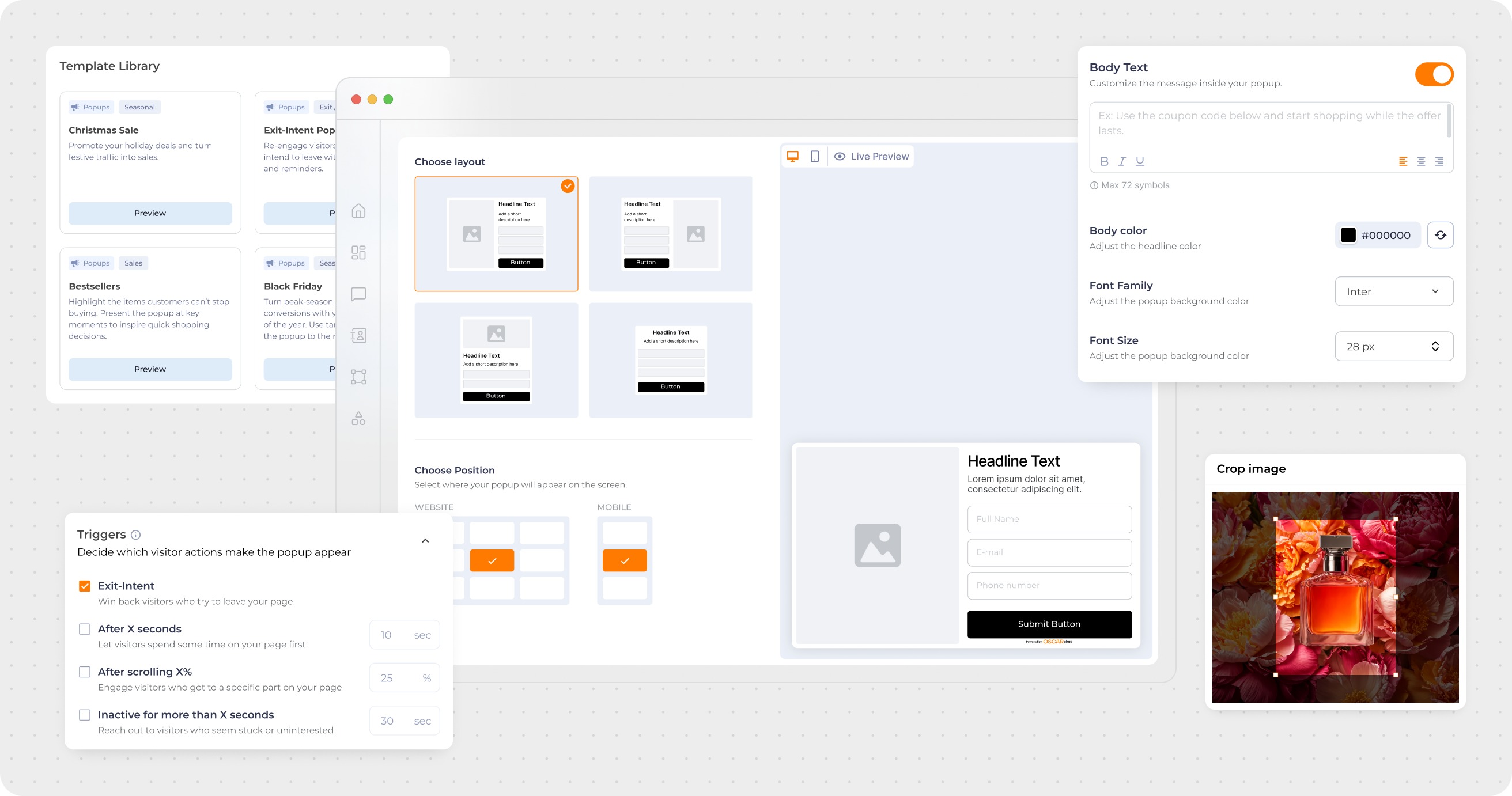
4–2 weeks out: Launch the early-access capture. Warm the list. Test every popup and every chatbot answer — broken experiences during the spike cost ten times what they cost now.
Sale week: Monitor, don't micromanage. Adjust triggers if needed. Let the systems run.
After: Follow up within days, not weeks. Review what the chatbot couldn't answer — those gaps are next year's content plan.
The tools in action
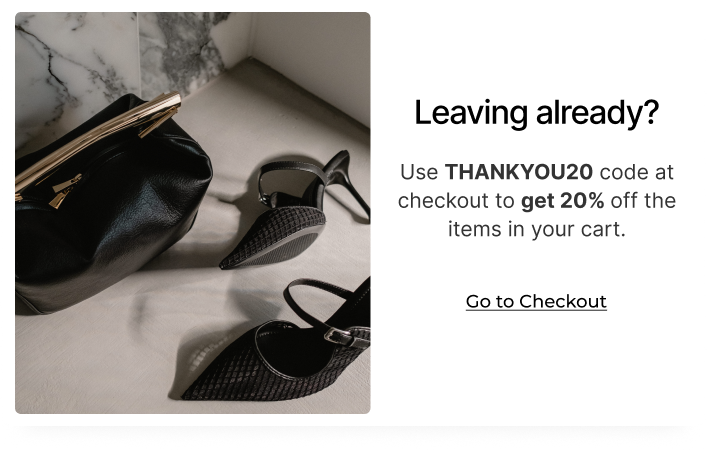
Exit-intent: the cart saver. When a visitor moves to leave, one well-timed discount code recovers sales that were already lost:
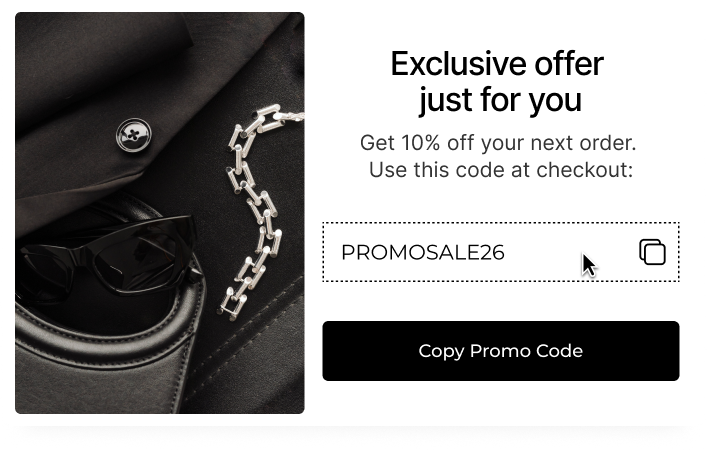
Frictionless codes. Every character a customer types is a chance to abandon. One-click copy fixes it:
What the winners understand
The discount gets the click. The systems keep the customer. A store with 30% off and no capture system makes November revenue. A store with 20% off, a trained chatbot, smart popups, and a follow-up sequence makes a customer base.
Black Friday 2026 isn't a week to survive. It's the week to build on.
7-Day Pro Trial for Every New Account
For your first 7 days, you are automatically on the Pro plan.
FAQ
-
When should I start preparing for Black Friday 2026?
Now. The tools take an afternoon to set up; the testing and refining take weeks. Six to eight weeks out is the minimum for everything to be proven before the spike. -
Can a chatbot really handle Black Friday support volume?
That's exactly what it's built for. Black Friday questions are repetitive by nature — stock, shipping, codes, returns — which is where AI performs best. Humans handle the exceptions. -
What's the single highest-ROI Black Friday investment?
The email list your popups build. Discounts drive this week's sales; the list drives every campaign for the next twelve months. Most stores underinvest in capture and overinvest in discount depth. -
Do I need a developer for any of this?
No. Popup builder templates, behavioral triggers, and chatbot training from your website URL — all visual, no code. Our training guide covers the bot setup in ten minutes. -
How do I avoid annoying visitors with popups during the sale?
Behavioral triggers and frequency caps: exit-intent (not on-load), once per visitor, genuine offers. A 15% code at the moment of leaving annoys nobody — a fullscreen popup at second zero annoys everybody. See our display rules tutorial.